
Dad Labs · playful apps for curious kids
Teaching kids to think from first principles.
Playful apps that teach kids to reason, not just remember.
For curious kids who want to know how things really work.
- 100% free
- No personal data collected
- No ads
A toaster turns electricity into heat with one part: the element, drawn here as the only lit part. Three thin mica cards are wound with nichrome ribbon. Push the lever down and 120 volts drives 7.5 amps through the ribbon’s 16 ohms, which is 900 watts. The ribbon resists the current, so the electrons’ energy becomes heat. Within seconds it settles near 650 °C, where the heat it gives off balances the power going in, and glows a dull cherry red. Press E to lift the shell away and watch it work.
- Power
- Power is voltage times current, 120 × 7.5 = 900 W, or V² ÷ R.
- Glow
- Iron starts to glow visibly at about 525 °C, the Draper point. Nichrome is used because its resistance barely changes as it heats.
Approach · First principles
Ask why. Then ask again.
First-principles thinking means not settling for “that’s just how it is.” Our favourite way in is an old habit called the 5 Whys: ask why something happens, then ask why about the answer, and keep going until you reach something that is simply true. Kids already do this. We just give them a toaster to point it at.
-
Why 1
Why does toast turn brown?
Heat makes the sugars and proteins on its surface react.
-
Why 2
Why is there heat?
The thin wires inside the toaster glow hot.
-
Why 3
Why do the wires get hot?
Electricity is pushed through them, and they resist it.
-
Why 4
Why does resisting make heat?
Moving electrons bump into the metal’s atoms and hand over their energy.
-
Why 5 · Fundamental truth
Why does the energy turn into heat?
Energy is never lost. It only changes form, here from electricity into heat.
Why it matters
A child who memorises that toasters make toast knows one fact. A child who reaches “energy only changes form” can work out a kettle, a hairdryer or a light bulb they have never seen. Reasoning from fundamentals is how you figure out anything new, rather than waiting to be told.
Through play
It works best as a game, not a lesson. Taking something apart makes the questions come naturally, and each answer is a small discovery. It’s how engineers and scientists tackle problems no one has solved before, and kids are naturally good at it.
Try it at breakfast: pick anything on the table and take turns asking why. There are no wrong answers, only another why.
Apps
Apps for curious kids.
Each one is a hands-on way to practise first-principles thinking, and every one is 100% free, with no personal data collected and no ads.
-
 100% free
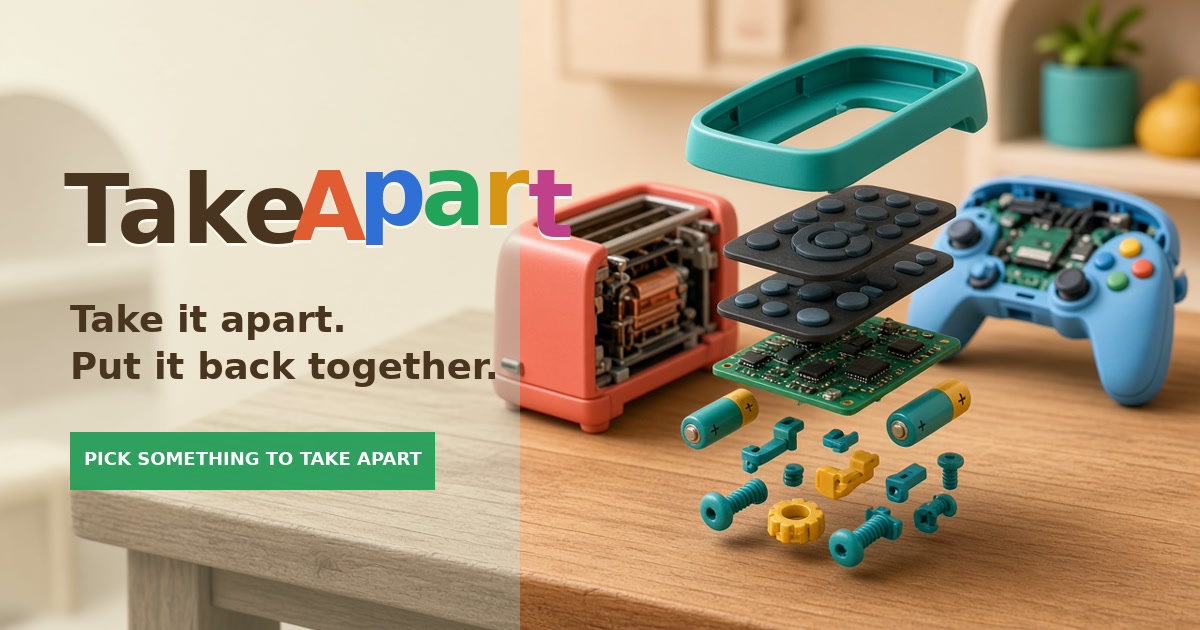
TakeApart
See how things work
Grab a screwdriver and peek inside real-world gadgets. Kids unscrew, pop off, and pull apart realistic appliances piece by piece, and learn what every part does along the way.
- Toaster
- Game controller
- RC car
- Headphones
100% free · No personal data collected · No ads
Try in the browserComing soon on theApp Store Coming soon onGoogle Play -
 100% free
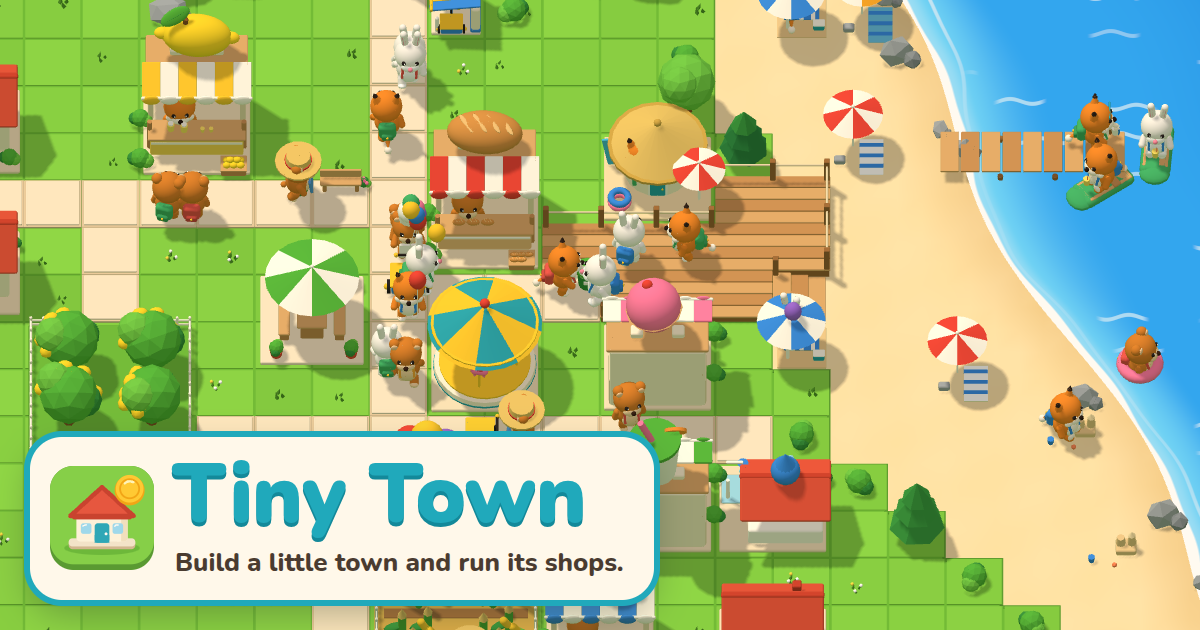
Tiny Town
See how a little business works
Animal visitors stroll through town on their way to the beach. Kids notice what they need, build a little shop to sell it, and watch the town grow, learning how prices, helpers and rent change what’s left. For ages 4 to 8, no reading needed.
- Lemonade stand
- Ice cream stand
- Popcorn stand
- Pier boats
100% free · No ads · No accounts · No personal data collected
-
More on the drawing board
Coming later
New ways to take ideas apart are being sketched now. They’ll show up here when they’re ready.
Skills for an AI world
Core skills for a world shaped by AI.
AI is changing how things get made and how problems get solved. We think that makes the fundamentals more valuable, not less. Kids who can ask good questions, break problems down and test their own ideas will be ready to use these tools thoughtfully, rather than simply depend on them.
We use AI as a tool in our own work, to research, design and build richer learning experiences than a small team could make on its own, including the figure at the top of this page, drawn with the Anatomy skill for AI coding agents. Every app is designed around the skills underneath.
In line with our privacy policy, nothing your child does in our apps is sent to AI services.
- Curiosity
- Noticing things and wanting to know how they work.
- First principles
- Reasoning from what’s fundamentally true, not just from what’s usual.
- Breaking it down
- Turning something big and confusing into small, solvable parts.
- Build and test
- Trying an idea, seeing what happens, and adjusting.
- How things work
- Forming a real mental model of the machines and systems around us.
About
Made by a dad, for his own curious kids.
Calm, ad-free apps that reward the question every kid asks: “What’s inside?”